Foreign executives, diplomats and corporate tenants will pay more for a high-quality flat in Prague, but they also expect more. This guide covers how to set the standard, the lease and the deposit, and how to pay the correct tax on rental income even if you do not live in the Czech Republic.
Luxury flats in Prague let well to foreign and corporate tenants in central, leafy districts such as Vinohrady, Malá Strana, Prague 6 and Karlín. The flat should be finished to a high standard and come with a bilingual lease. Income from long-term letting is taxed under Section 9 of the Income Tax Act (zákon o daních z příjmů) at 15% (23% on the part of the tax base above the statutory threshold). You can deduct either your actual expenses or a flat-rate 30% allowance. Owners who are not Czech tax residents must also file a tax return in the Czech Republic.
Who is looking for a luxury rental in Prague today
Demand in the premium segment comes mainly from three groups. The first is foreign specialists and managers who move to Prague for two to five years. They pay for their own housing, often with a contribution from their employer. The second is diplomats and staff of international organisations, who care most about security, discretion and being close to their office or an international school. The third is companies relocating employees to Prague. In these cases the lease is signed directly by the employer or by the relocation agency acting for the employee.
All three groups decide quickly, often remotely after a video viewing. They don't want to deal with anything that would be taken for granted in their home country. They will pay more for a hassle-free flat, but they won't put up with unclear terms, slow communication or defects left unresolved.
Vinohrady, Malá Strana, Prague 6 or Karlín
According to the Deloitte Rent Index for the second quarter of 2026, published on 17 August 2026, the average asking rent in Prague was CZK 462 per square metre per month. That is 0.9% lower than in the previous quarter. Prague 7 was the most expensive district (CZK 493/m²), followed by Prague 1 (CZK 490/m²) and Prague 2 (CZK 482/m²). These figures are averages of asking rents across the whole market. Premium flats usually rent for more, while the rent actually agreed after negotiation is usually lower. After years of growth, the Prague market is also cooling, so don't assume rents will keep rising.
- Vinohrady and Vršovice: families and single people value the parks, the cafés and the short walk to the centre. Flats in buildings from the First Republic era (1918–1938) with their original features are especially popular.
- Malá Strana and Staré Město: a prestigious address for diplomats and senior executives. What matters here is peace and quiet, the view and parking, which is scarce.
- Prague 6 (Dejvice, Bubeneč, Střešovice): close to embassies, international schools and the airport. There is demand for larger flats and for villas with gardens.
- Karlín and Holešovice: new builds and conversions with modern amenities, popular with younger professionals and corporate tenants.
Yields in these districts depend mainly on the purchase price. An older flat in Malá Strana bought years ago may produce a higher percentage yield than a newly purchased new build in Karlín, even if the rent is similar. Before you invest, work out the net yield. Deduct the building's repair fund contributions, insurance, management fees and tax, and allow for one to two months a year without a tenant.
The furnishings and standard foreign tenants will pay more for
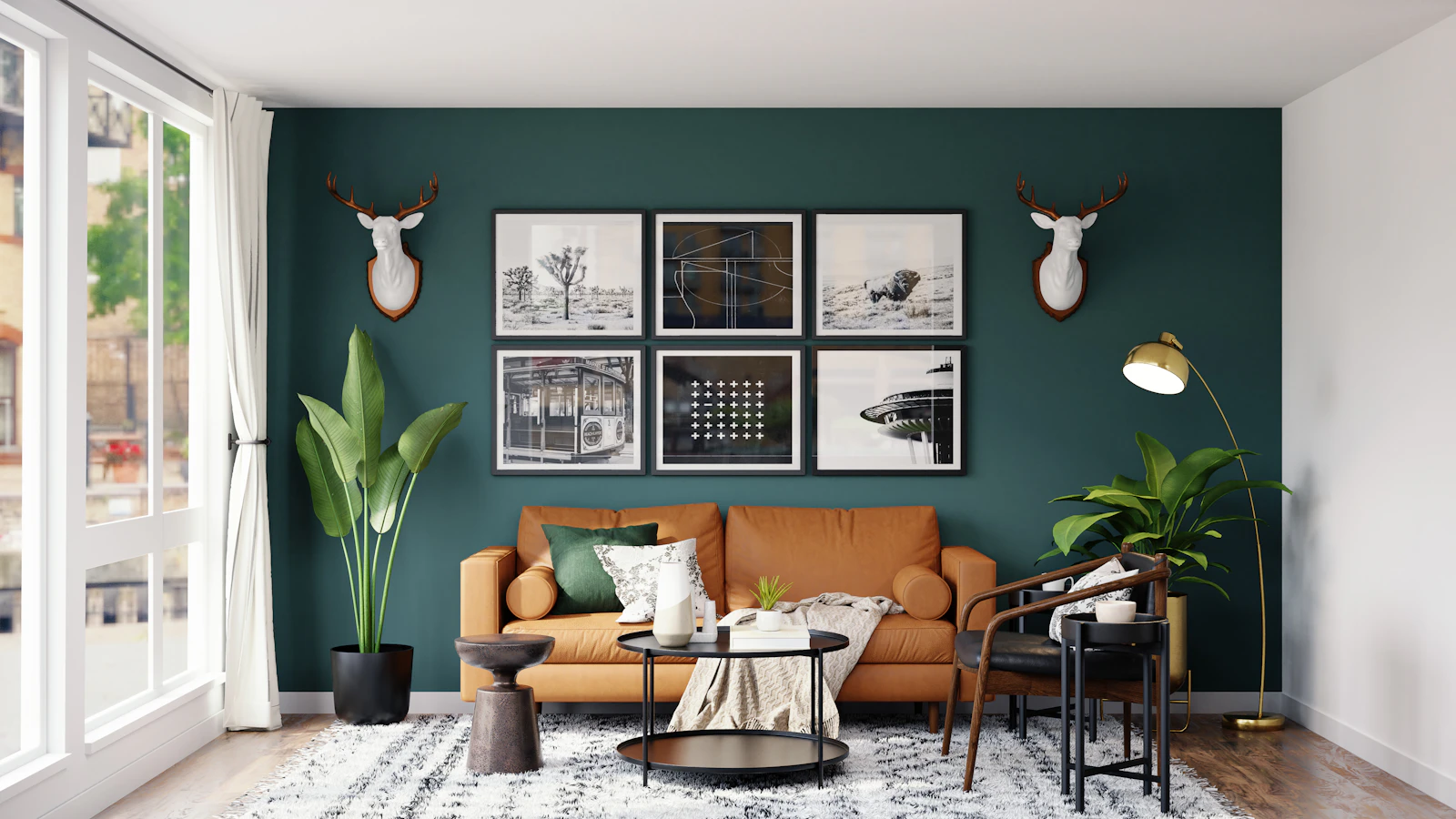
Foreign tenants usually look for a fully furnished flat. Alternatively, they want an unfurnished one with a fully fitted kitchen and built-in wardrobes. The market penalises half-measures such as a random mix of furniture. It is easier to justify a higher rent if the flat offers:
- air conditioning, or at least shading and good ventilation, because tenants may complain seriously if an attic flat overheats in summer,
- a garage space or guaranteed parking, especially in Prague 1 and 2,
- good-quality kitchen appliances, a dishwasher, a washer-dryer and plenty of storage,
- a reliable fibre-optic internet connection and a quiet room to work in,
- a lift, a secure entrance to the building and windows with good sound insulation,
- a bilingual handover report and appliance manuals in English.
Good service matters just as much. Defects should be fixed quickly, tradespeople should be able to communicate in English, and the tenant should have a single point of contact. This is often what decides whether a tenant renews the lease after a year.
A lease in Czech and English
Residential leases are governed by the Civil Code (občanský zákoník, Act No. 89/2012 Coll.), in particular Section 2235 et seq. In practice, the lease should be drawn up in two languages, set out in two columns. It should also state which version prevails if the two conflict. If a dispute goes to a Czech court, it helps if the Czech version prevails.
Under Section 2254 of the Civil Code, the security deposit (kauce or jistota) may not exceed three months' rent, and any contractual penalties count towards this limit. When the tenancy ends, the deposit must be returned together with interest, although the landlord may deduct any unpaid rent and proven damage. The law sets no fixed deadline for returning it, so it is best to agree one explicitly in the contract.
The notice period is three months and runs from the first day of the month after the notice is delivered. A tenant may end an open-ended tenancy without giving a reason, whereas a landlord may do so only on the grounds listed in Section 2288. For fixed-term tenancies, bear Section 2285 in mind: if the landlord does not ask the tenant to vacate within three months of the end of the term, the tenancy is renewed for the same period, but for no more than two years.
Section 2248 allows an inflation clause, under which the parties may agree to an annual rent increase, typically in line with the inflation rate published by the Czech Statistical Office. Otherwise, rent can be increased by agreement or under the procedure in Section 2249, which is capped at roughly 20% over three years and does not require the tenant's consent. With corporate tenants, a diplomatic clause is also common, allowing the tenant to end the lease early if recalled from the country. Think carefully about the conditions under which you would accept one.
Corporate lets or short-term accommodation in 2026
A corporate let is a standard residential tenancy, except that the tenant is a legal entity and the flat is occupied by one of its employees. The contract should name the person who will live in the flat and set out what happens if they leave the company. The advantages tend to be reliable payment and a lower risk of disputes.
Short-term accommodation through online platforms works under a different regime. The income is taxed as an accommodation service under Section 7 of the Income Tax Act, social security and health insurance contributions are payable on it, and there are additional obligations: a guest register, registering foreign guests under the Act on the Residence of Foreign Nationals, and the local accommodation fee (poplatek z pobytu). EU Regulation 2024/1028 on data collection for short-term rentals has applied since 20 May 2026. However, the Czech eTurista register with a mandatory registration number is not yet in force, and the current draft amendment provides for it to take effect on 1 January 2028. You also need to take into account the rules of the owners' association (společenství vlastníků) and any future restrictions imposed by municipalities. For a premium flat, a medium-term corporate let is therefore usually the calmer and more predictable choice.
Income tax on rental income for residents and non-residents
Income from long-term letting falls under Section 9 of the Income Tax Act (Act No. 586/1992 Coll.). You can deduct either your actual, documented expenses – such as depreciation, mortgage interest, repairs, insurance, real estate tax (daň z nemovitých věcí) and management fees – or a flat-rate allowance of 30% of income, up to CZK 600,000 a year. The flat-rate allowance covers all expenses, including depreciation, and whichever method you choose must be applied to all the properties you let. The resulting tax base is taxed at 15%, and the portion above CZK 1,762,812 (the threshold for 2026) at 23%. No social security or health insurance contributions are payable on rental income outside a trade licence.
Rent from property in the Czech Republic is always treated as Czech-source income. A tax non-resident – a person with no home in the Czech Republic who does not habitually stay here – must therefore file a Czech tax return with Annex No. 2. The tax paid in the Czech Republic can then usually be credited in their country of residence under the relevant double taxation treaty. A non-resident can always claim the basic taxpayer credit, but other credits and deductions are available only to residents of an EU or EEA country who earn at least 90% of their worldwide income in the Czech Republic.
The return for 2026 is filed in 2027: by 1 April on paper, roughly a month later if filed electronically, and by 1 July if you are represented by a tax adviser. The rules have numerous exceptions, so discuss your particular situation with a tax adviser – especially if you are a non-resident or have several sources of income – and have the contract reviewed by a lawyer.
Remote management: when it pays to leave the flat to professionals
Professional management makes sense above all if you do not live in Prague, own several flats, do not speak fluent English, or would rather not be on call for tenants on a Friday evening. A property manager typically handles advertising and viewings, tenant screening, the contract, check-in and check-out, the annual service charge statement, minor repairs and monitoring of payments. With foreign tenants, communication in English and an understanding of the needs of companies relocating staff to Prague are further benefits.
The management fee depends on the scope of services and is usually a tax-deductible expense if you claim actual expenses. Weigh it against the value of your own time and the cost of a single month without a tenant, which good management can help you avoid.
Frequently asked questions
Can I ask for a deposit higher than three months' rent if the flat is expensive? No. The limit of three times the monthly rent under Section 2254 of the Civil Code (občanský zákoník) applies regardless of the flat's value, and contractual penalties also count towards it. If you are considering any other form of security, have a lawyer review it to make sure it does not circumvent the statutory limit.
As a non-resident, do I have to pay tax on rental income in the Czech Republic? Yes. Income from renting out property in the Czech Republic is taxed in the Czech Republic, and you must file a Czech tax return. Double taxation treaties prevent you from being taxed twice; check with a tax adviser how the credit will be applied in your country of residence.
Is the 30% flat-rate deduction or actual expenses the better option? The flat-rate deduction is simpler and works well for a flat with no mortgage and no major repairs. If you are repaying a loan, renovating or depreciating a more expensive property, your actual expenses may be higher, so it is worth calculating both options.
If you are considering letting a premium flat to a foreign or corporate tenant, DALILE LIVING can help you prepare the flat, select a tenant, draw up a bilingual tenancy agreement and manage the property remotely over the long term. We would be happy to go through with you which type of letting arrangement suits your flat best.
Sources
- Deloitte: Nájemné v Praze i většině krajských měst mírně zlevnilo (Rent Index, 2. čtvrtletí 2026)
- Zákon č. 89/2012 Sb., občanský zákoník
- Finanční správa: Daň z příjmů fyzických osob, obecné informace
- Finzi.cz: Daň z příjmu z pronájmu 2026 prakticky
- Aedu.cz: Kauce za nájem a její vrácení
- e-turista.cz: Registr ubytování, návrh zákona a stav legislativy
- BusinessInfo.cz: eTurista, revoluce v krátkodobém ubytování se odkládá