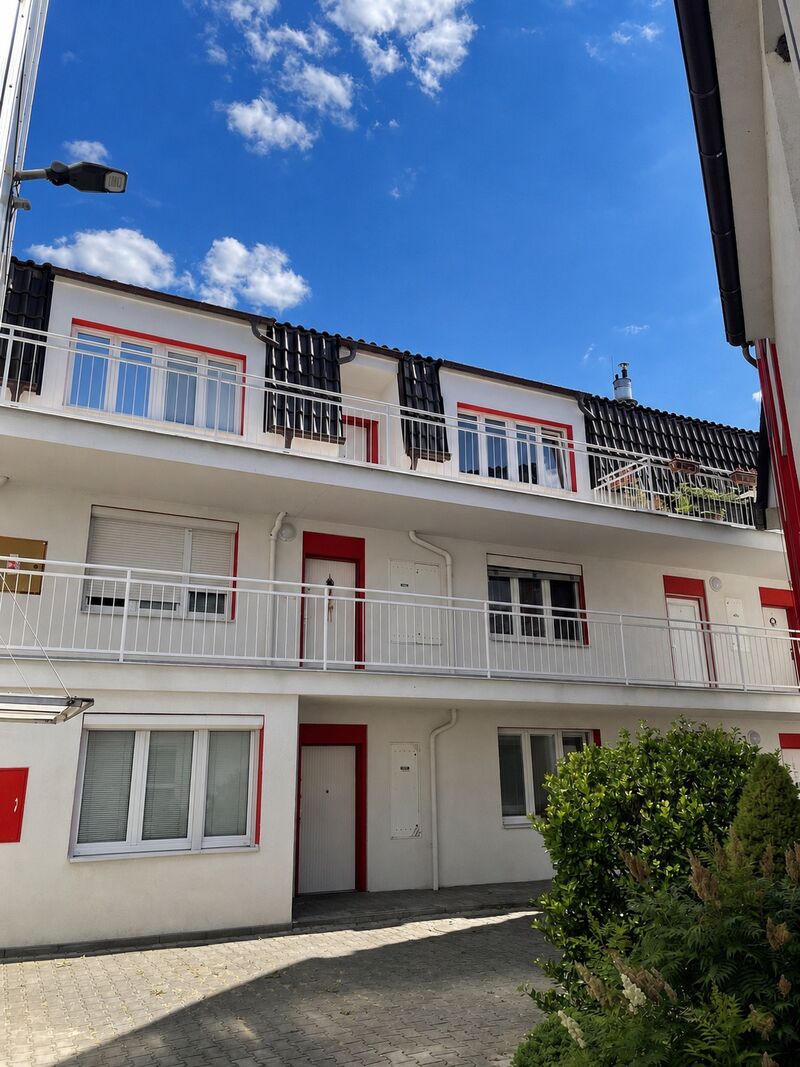
Should you gift a flat to your children now, leave it to them as an inheritance, or sell it and divide the proceeds? We explain what each option means for tax, for the parents' housing and for relationships between siblings.
In the Czech Republic, gifting property to your children is tax-neutral: a gift from a relative in the direct line is exempt from income tax, and real estate transfer tax (daň z nabytí nemovitých věcí) no longer exists. Inheritance is exempt in the same way. It also works out better if the property is sold later, because the heir can count the time the parent owned it towards the holding period test. Selling and dividing the money makes sense where there is one property and several children with different plans, or where co-ownership would lead to disputes.
Gifting during your lifetime vs inheritance: the main differences
With a gift, the child becomes the owner once the transfer is entered in the Land Register (katastr nemovitostí) on the basis of an application for registration (vklad). The parents know for certain who will receive the property and can settle everything calmly, while everyone can still discuss it sensibly. On the other hand, they give up ownership. Unless something further is agreed, they can no longer make decisions about the flat, sell it or encumber it. If family relationships deteriorate, a gift can be reclaimed only in exceptional cases, typically for gross ingratitude by the recipient towards the donor.
Inheritance, by contrast, leaves the parents in full control for the rest of their lives. Who receives the property can be determined by a will, a legacy or an inheritance contract with a spouse. The price for this is probate proceedings conducted by a notary, which can take months, and the risk that the heirs will not reach agreement. Where there is no will, the estate passes according to the statutory classes of heirs, and a single flat can easily end up in the co-ownership of several people, each with a different idea of what to do with it.
Tax implications within the family
Gift tax and inheritance tax were abolished back in 2014, and their rules were taken over by the Income Tax Act. Under that Act, a gift from a relative in the direct line, i.e. from parents or grandparents, is exempt regardless of its value. The same applies to collateral relatives listed in the Act and to a spouse. Inheritance is exempt too. Real estate transfer tax was abolished by Act No. 386/2020 Coll., so today it is payable neither on a purchase nor on a gift.
What remains are the costs and obligations:
- an administrative fee of CZK 2,000 for each application for registration in the Land Register (a discount for electronic filing is available if the conditions are met),
- the fee of a lawyer or notary for drafting the contract, or for official certification of signatures,
- notifying the tax office of exempt income if its value exceeds CZK 5 million; the obligation lies with the recipient, and the deadline is the same as the deadline for filing the tax return for that year,
- real estate tax (daň z nemovitých věcí), which the new owner pays from the date of acquisition and for which they must file a return.
The notification obligation frequently applies to premium flats, and failing to comply can result in a penalty calculated from the unreported amount. An exception to the exemption arises where the property would be included in a business owner's business assets. Different rules apply there, and the situation needs to be assessed individually.
Reserved right of use and lifelong right of residence
The most common concern for parents is: what if I give away the flat and then can't live in it? The solution is an easement (služebnost), known in practice as a lifelong right of residence (věcné břemeno dožití) or right of use. It is agreed directly in the deed of gift and guarantees the parents the right to live in the flat for life, regardless of who owns it and to whom it might later pass. The easement does not arise when the contract is signed but only when it is entered in the Land Register, so it needs to be included in the application for registration.
An easement also has its price. It reduces the market value of the property, and if the child wanted to sell the flat or use it as collateral for a mortgage, most banks and buyers would be hesitant. It is therefore wise to consider whether the easement should cover the whole flat or only part of it, and whether to add a pre-emption right or a prohibition on transfer and encumbrance in the parents' favour. A prohibition on transfer prevents the child from selling the property without their consent.
Protection against disputes between siblings
When parents gift a flat to only one of their children, the others need not lose out. The Civil Code protects so-called forced heirs, i.e. the deceased's children. Under Section 1643, an adult descendant must receive at least a quarter of their statutory share of the estate, and a minor at least three quarters. Under Section 1660, anything the heir received from the deceased free of charge in the last three years before their death counts towards this compulsory share, unless the deceased specified a longer period.
For family harmony, it is therefore essential that the gift is not a one-off step taken in isolation. A combination of a deed of gift and a will has proved effective, with the parents clearly explaining in the will how the gift should be taken into account, for example whether it should count towards the recipient child's share of the estate. If the other children are to be compensated in money or other assets, it is a good idea to put this in writing. An open conversation with all the siblings beforehand is often more valuable than even the best-drafted contract.
What if there is a mortgage on the property?
The bank's lien does not cease when the property is transferred. The property passes to the child together with the lien, but the parents remain the borrowers under the loan agreement. Many loan agreements also contain a prohibition on transfer or an obligation to obtain the bank's consent before any transfer, so a gift is not possible without the bank's cooperation. There are essentially three options: pay off the loan first, have the child take over the debt with the bank's consent after a check of their creditworthiness, or transfer or refinance the mortgage to the new owner. If a lifelong right of residence is being agreed at the same time, bear in mind that banks are reluctant to grant new loans on property encumbered in this way.
Selling an inherited property and income tax
This is where the key practical difference between a gift and an inheritance becomes apparent. Income from the sale of property is exempt from tax if the seller meets the holding period test under Section 4(1)(b) of the Income Tax Act. For properties acquired from 2021 onwards it is ten years; for older ones, five years. The exemption is also available if the seller had their residence in the property for at least two years immediately before the sale, or if they use the money for their own housing needs.
Anyone who inherits a flat from a parent or grandparent, i.e. from a relative in the direct line, or from a spouse, can also count towards the holding period test the time during which the deceased demonstrably owned the property. A flat that the parents owned for decades can therefore be sold by the heir straight away without paying tax. With a gift, the donor's period of ownership does not count, and the test starts again from the date of acquisition. A child who sells a gifted flat before ten years have passed and does not qualify for another exemption pays tax on the gain as other income. Which expenses can be deducted in that case should be checked in advance with a tax adviser for gifted properties, as the calculation of the tax base differs from that for an ordinary purchase.
When it is better to sell the property and divide the money
The option of the parents selling the flat themselves and dividing the proceeds among their children is often overlooked when transfers are being considered, yet for many families it is a suitable solution. It makes sense particularly when:
- there is one property and several children, none of whom wants or is able to take it over and buy out the others,
- the children live in another city or abroad, and managing the flat remotely would be a burden for them,
- the parents themselves meet the holding period test, so their sale is exempt, whereas a sale after a gift would be taxable for the child,
- the property needs an expensive renovation for which the heirs have neither the funds nor the inclination,
- the parents are planning to move somewhere smaller and want to keep part of the money for themselves.
Money can be divided precisely and fairly, and a cash gift between parents and children is exempt in the same way as a gift of property. The opposite approach, i.e. selling the flat to a child for a token or significantly lower price, is recommended only exceptionally. The difference between the usual market price and the agreed price may be treated as a gift, the seller pays tax on the amount actually received unless they qualify for the exemption, and in probate proceedings such a transaction can raise the same questions as an outright gift. It sometimes makes sense where the child genuinely repays part of the value to the parents.
Frequently asked questions
Does a child have to pay any tax after receiving a flat as a gift from their parents? They pay neither income tax nor transfer tax; a gift from a relative in the direct line is exempt. They pay only the Land Register registration fee and, subsequently, real estate tax, and if the value of the gift exceeds CZK 5 million, they must notify the tax office of the gift.
Can the parents continue to live in the flat after gifting it? Yes, provided they agree an easement of use, i.e. a lifelong right of residence, in the deed of gift and have it entered in the Land Register. Their right to live there is then secured even if the flat later changes owner.
Is it better to gift a flat or leave it as an inheritance if the child wants to sell it soon? For a quick sale, inheritance is more tax-efficient, because the parent's period of ownership counts towards the holding period test. For a gifted flat, the test starts again from the date of the gift, unless the child lives in the flat for at least two years or uses the money for their own housing. We always recommend checking the specific solution with a lawyer, notary and tax adviser, as it depends on the family situation and on the details of the contracts.
If you are considering transferring a property within your family, DALILE LIVING can help you with a market valuation and with the sale, including an off-market listing. Legal and tax questions should always be discussed with a lawyer and a tax adviser.
Sources
- ČÚZK – Návrh na zahájení řízení o povolení vkladu do katastru
- Zákon č. 386/2020 Sb., kterým se zrušuje zákonné opatření Senátu o dani z nabytí nemovitých věcí
- Finance.cz – Jak a od kdy se změnily podmínky u daně z příjmu z prodeje nemovitosti
- E15 – Prodej darované nemovitosti: pravidla pro osvobození od daně
- Prodej zděděné nemovitosti a daň z příjmů
- AK JUDr. Pytela – Povinný díl dědice
- Notářská komora ČR – Zápočet na dar: k čemu slouží, jak vypadá v praxi
- Realitní advokáti – Darování nemovitosti a daně: kdy platíte daň z příjmů a kdy stačí oznámení FÚ