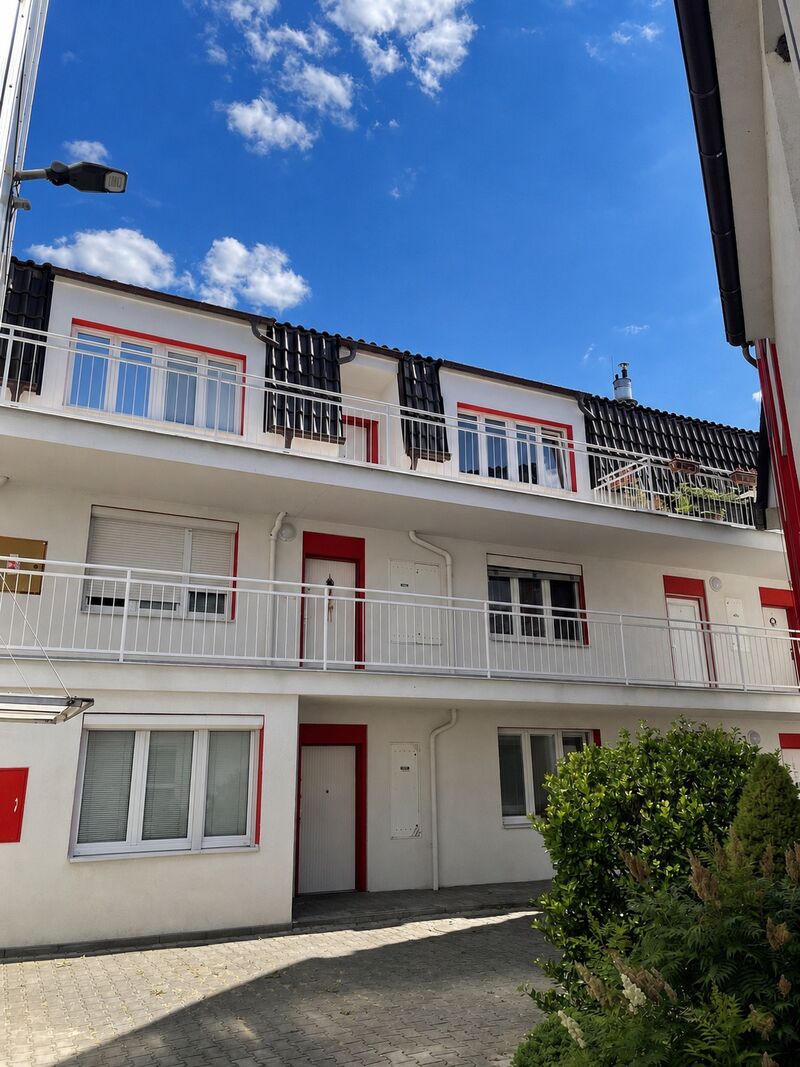
Co-operative flats are tempting because they cost less. However, what you buy is a share in a housing co-operative, not the flat itself. We explain how this affects your mortgage, the security of the purchase and a future sale.
When you buy a co-operative flat (družstevní byt), you do not acquire the flat itself. Instead, you buy a share in a housing co-operative (bytové družstvo), which gives you the right to use the flat as a tenant. The lower price therefore usually comes with more complicated financing, less control over the building and a weaker position when you sell. If you are buying with a mortgage or plan to let the flat, a flat in personal ownership (osobní vlastnictví) is usually the safer choice for most buyers in Prague.
Transferring a co-operative share vs buying a residential unit
A flat in personal ownership is a separate unit registered in the Land Registry (katastr nemovitostí). You acquire ownership when the transfer is entered in the Land Registry (vklad do katastru), which is a public register protected by law. The administrative fee for the application is CZK 2,000, and it is usually 20% lower if you file electronically through the Land Registry's application. The Land Registry normally decides within 30 days, or later in more complex cases. Once entered, the registration takes effect retroactively from the date the application was filed.
With a co-operative flat, the co-operative owns the building. You buy a co-operative share, meaning the rights and obligations of membership, which include the right to rent a specific flat. This is governed by the Business Corporations Act (zákon o obchodních korporacích, Act No. 90/2012 Coll., Section 727 et seq.). The share transfer agreement is not entered in the Land Registry. Only the co-operative records it, in its own register of members. By law, the seller's debts to the co-operative relating to the use of the flat also pass to the buyer. This is why a confirmation that there are no outstanding debts as at the date of signing is so important.
Why co-operative flats are cheaper, and when the price difference pays off
The lower price reflects less certainty and a weaker legal position. The buyer cannot pledge the flat to a bank as security, needs the co-operative's consent to let it, and key decisions about the building are made by the members' meeting. You also need to add the outstanding annuity to the advertised price. This is the share of the co-operative's loan attributable to your flat. It remains payable and increases the real price.
The price difference can be worthwhile if you are buying with your own funds, plan to live in the flat long term, the co-operative is well managed and has no significant debts, and its articles of association (stanovy) allow flats to be transferred into personal ownership. If any of these conditions is missing, the saving is usually wiped out when you sell.
When you sell, you will face the same obstacles you face today as a buyer. Buyers relying on a mortgage have limited financing options, so the pool of interested buyers narrows mainly to those paying from their own funds or able to offer another property as security. This affects both the price and the time it takes to sell. If the co-operative allows transfer into ownership, completing the transfer before the sale usually increases the number of interested buyers and strengthens the seller's negotiating position. The exact effect on price depends on the location and the condition of the building, so it cannot be promised in advance.
Mortgages for co-operative flats: security, banks and higher interest rates
You cannot arrange a standard mortgage secured on the co-operative flat you are buying, because a co-operative share is not real estate. Banks do still finance the purchase of shares, in three main ways. The first is a mortgage secured on another property, such as your parents' flat or house. The second is a pre-mortgage loan (předhypoteční úvěr), provided the co-operative confirms in writing that the flat will be transferred into personal ownership within an agreed period, usually one to two years. After the transfer, the mortgage is registered directly on the flat. The third option is an unsecured loan, for example from a building savings scheme (stavební spoření) or a consumer loan. These, however, tend to have higher interest rates and lower maximum amounts.
The general rules of the Czech National Bank (ČNB) also apply. For mortgages on owner-occupied housing, the loan-to-value limit remains 80%, or 90% for applicants under 36. For mortgages on investment properties, from 1 April 2026 the ČNB recommends that banks apply a limit of 70% and a maximum total debt of seven times annual income. You should therefore secure your financing before signing a reservation agreement.
What to check: articles of association, the co-operative's debts, loans on the building, consent to letting
Start with the co-operative's articles of association. Find out whether they restrict the transfer of shares, whether a transfer requires the board's consent, and whether they allow flats to be transferred into ownership at all. Ask for the financial statements and an extract from the Commercial Register (obchodní rejstřík). You need to know whether the co-operative has any loans, enforcement proceedings (exekuce) or disputes, and how large its repair fund is.
If you plan to let the flat, study the rules on subletting. Under Section 2275 of the Civil Code, a tenant who does not live permanently in the flat needs the landlord's consent to sublet it, and here the landlord is the co-operative. Both the request and the consent must be in writing. The articles of association may restrict subletting or charge a fee for it. Subletting without consent is a serious breach of obligations and may even lead to expulsion from the co-operative.
Converting to freehold ownership: when it is realistic and what it costs
Members of older co-operatives built with state support used to have a statutory right to transfer their flat into ownership. This special period ended on 31 December 2020. Today, a transfer is possible only if the co-operative's articles of association (stanovy) provide for it or if the members' meeting (členská schůze) approves it. Co-operatives covered by Act No. 311/2013 Coll. may also continue to transfer units. The usual condition is that the annuity (anuita), meaning the flat's share of the co-operative's loan, has been paid off.
On top of the annuity, the costs include drawing up the owner's declaration (prohlášení vlastníka), the transfer agreement and registration in the Land Registry (vklad do katastru nemovitostí). If no transfers have yet taken place in the building, an owners' association (společenství vlastníků) is formed once the first units have been transferred. Real estate transfer tax (daň z nabytí nemovitých věcí) has been abolished, so it does not apply when a unit is transferred into ownership. Before you sign the contract, ask the co-operative to confirm in writing whether it will allow a transfer, and on what terms. A verbal promise is not enough.
Co-operative flats and foreign buyers: restrictions, risks and better alternatives
This section is mainly for buyers from abroad. Czech law does not prevent foreign nationals from buying a flat or a co-operative share. In practice, however, a co-operative flat is often a dead end for them. Banks lend to non-residents more cautiously, and a non-resident will not usually get a mortgage on a co-operative share without securing it against another property in the Czech Republic. Co-operatives often have strict subletting rules. In addition, dealings with the co-operative, members' meetings and all documents are in Czech, and membership brings obligations that are difficult to meet from abroad.
Foreign investors who want to let out a flat and be able to prove clearly that they own it are usually better served by a freehold flat. Their ownership is recorded in the Land Registry, they can use the flat as security for a loan, and they let it out directly as its owners. If a co-operative flat still appeals to you, it only makes sense to buy it if the transfer into ownership is secured by contract and the whole transaction is checked by a lawyer.
Checklist before signing an agreement to transfer a co-operative share
- the co-operative's current articles of association and its rules on transferring shares, subletting and transferring flats into ownership
- written confirmation from the co-operative that the seller has no outstanding debts as at the date of signing
- the amount of outstanding annuity and the terms of the co-operative's loan
- financial statements, the size of the repair fund and planned repairs to the building
- an extract from the Commercial Register, a check of the Insolvency Register and any disputes involving the co-operative
- the lease agreement for the flat, and whether the flat's actual condition matches the documentation
- pre-approved financing, unless you are buying with your own funds
- secure escrow of the purchase price, released only once the agreement has been delivered to the co-operative
- a written statement from the co-operative on transfer into ownership, if you are counting on it
Frequently asked questions
Is buying a co-operative flat safe? It can be, provided you check the articles of association, the co-operative's finances and confirmation that the seller has no debts, and pay the purchase price through escrow. As the flat is not recorded in the Land Registry, however, a legal review of the documents matters even more than it does for a freehold flat.
Can I get a mortgage on a co-operative flat? Not a standard mortgage secured against the flat you are buying. Banks do, however, offer mortgages secured against another property, pre-mortgage loans (předhypoteční úvěr) followed by a transfer into ownership, or unsecured loans on less favourable terms.
Is the co-operative obliged to transfer the flat into my ownership? Generally, no. The special statutory right for older co-operatives ended at the end of 2020. Today, it depends on the articles of association and on the co-operative's decision, so get the terms of the transfer confirmed in writing before you buy.
This article explains the general rules and is not a substitute for legal or tax advice. Before signing any contract, have a lawyer review the co-operative's articles of association and the contract documents, and check any tax questions with a tax adviser.
DALILE LIVING can help you find a suitable flat in Prague or elsewhere in the Czech Republic and check its legal and technical condition before you sign. We would be glad to talk through with you whether a co-operative or a freehold flat suits you better.
Sources
- Česká spořitelna – Hypotéka na družstevní byt: Co je dobré vědět?
- Portál veřejné správy – Návrh na vklad do katastru nemovitostí
- ČÚZK – FAQ Aplikace Návrh na vklad
- Finance.cz – Jak je to s převody družstevních bytů do osobního vlastnictví po 1. 1. 2021?
- Advokátní kancelář Šmarda – Převod družstevního bytu do osobního vlastnictví
- SBD Praha – Podnájem družstevního bytu má svá pravidla
- ČNB – ČNB doporučuje přísnější limity pro investiční hypotéky. Kapitálové rezervy se nemění
- Podnikatel.cz – Zákon o obchodních korporacích, Bytové družstvo